









We continue our series looking back at previous Women's
Rugby World Cup winning sides by catching up with New Zealand
captain Farah Palmer, one of the true greats of the Women's
Game.
RELIVE THE PREVIOUS TOURNAMENTS WITH WINNERS
KATHY FLORES (USA - 1991) AND
GILL BURNS (ENGLAND - 1994)
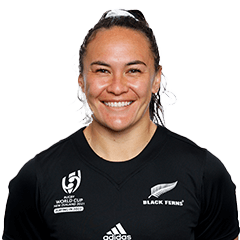
The name Farah Palmer will always feature prominently in
Women's Rugby World Cup history after she captained the New
Zealand Blacks Ferns to three successive titles between 1998 and
2006 with an unblemished record.
Palmer retired from international rugby after the hat-trick
of titles, bringing down the curtain on a remarkable career in
which she played 35 tests in 10 years - 30 of them as captain - and
during which time New Zealand totally dominated the Women's
Game.
Many have tried to unlock the secret of the Black Ferns'
success on the World Cup stage, but as Palmer took a stroll down
memory lane with
Total Rugby Radio it was easy to see where the edge may
have come from, certainly in Amsterdam in 1998.
New Zealand had not played in the tournament four years
earlier in Scotland, but the 1991 semi finalists arrived in the
Dutch capital on something of a mission and determined to realise
their full potential.
Professional approach
"We really didn't know what to expect but we decided
that we wanted to go out there and really prove that we were
possible champions, that rugby was New Zealand's number one
game and that we were here and we were serious," recalled
Palmer.
"I remember we were quite proud of the way we dressed
and made sure that we had proper presentation and leading up to the
game and after the games we had water and bread rolls and things
like that one sidelines.
"We didn't really have any expectations of know what
to expect, but many of the players had never left New Zealand so it
was all a bit of an eye-opener for them.
"I don't know whether it's true or not, but I
have a memory of us being the only team that walked around with
water bottles in 1998 and then when we went back in 2002 it was the
norm, everyone was walking around with water bottles and having
bananas and lollies immediately after the game.
"Whereas in 1998 I think it was a little but different
then and people were kind of looking at us all dressed up in
Canterbury, who were our sponsors at that time, kind of thinking
wow, check them out, they're all dressed up and they've got
four or five different outfits, so we appreciated then that the New
Zealand Rugby Union did put a lot of sponsorship into our team.
"Nowadays I think other teams are definitely catching up
and it's getting tighter and tighter."
Dream start
Palmer's first taste of the World Cup could not have gone
better were it written by a Hollywood scriptwriter, the Black Ferns
under her leadership running riot to defeat Germany 134-6 in their
opening Pool match.
"It was a great game," recalled Palmer. "I
remember Germany seemed to be quite happy just playing alongside us
and smiling at us the whole time and we didn't know what to
expect, so we went out there quite serious about it.
"We weren't taking the game lightly or anything and
then we realised the level in Germany wasn't really that high,
but we didn't take the mickey out of them or anything, we just
treated it like a normal game and tried to put some moves together
and practice some moves that we would be using on some of the other
teams.
"I think that Germany really enjoyed the game as
well."
There was no let up in the following matches with Scotland
dispatched 76-0 and Spain 46-3 before defending champions England
stood in New Zealand's way of a first World Cup final. England
did come closest to halting the Black Ferns' juggernaut in that
tournament, but were still soundly beaten 44-11.
Palmer, though, insists their passage to the final was
anything but as straightforward as the results would suggest,
revealing a punishing drill that was a huge motivator to keep their
try-line unbroken no matter who the opponent.
"I think we were quite hard on ourselves and we had
quite high standards. I remember our coach Darryl Suasua didn't
want us to let anybody cross our line so that was kind of our
motivation during the game, to have no team score against us, so
when another team scored against us we were quite disappointed and
hard on ourselves.
Punishing drill
"I think the punishment for every point scored against
us was we had to do a 'Hennie Muller', which is a notorious
run around the field, so we had high standards. We didn't think
it was easy at all, but we were really pleased with our
performance."
A try conceded meant five Hennie Muller's had to be run,
either after the match or at the next training session, so that
meant running down the side of the pitch, then running the
diagonal, back up the other side of the pitch and coming back on
the diagonal to the starting point to complete one.
"That kind of thing we did to keep our own standards up.
We didn't know what to expect so every game we went into we
treated it as if this was going to be a close game and that game
against England we were really treating it quite seriously ... we
were quite a serious bunch back in 1998!"
All that stood between the Black Ferns and trophy now was
1991 winners USA - who remain to this day the only side to beat New
Zealand on the World Cup stage - but four tries from Vanessa Cootes
ensured her side ran out 44-12 winners to allow Palmer to get her
hands on the silverware.
"I think I remember being put from hooker to number 8
late in the game and I just remember thinking wow this is unreal,
we are going to win the World Cup towards the end of the
game," recalled Palmer, now mother to an eight-month-old son
Cody.
"The final whistle went and everyone was just jumping up
and down, but being away from home - we had a small group of people
that made the trip from New Zealand - it was kind of surreal.
Golden girls
"I was just buzzing [when I picked up the trophy], I
think I was grinning from ear to ear and was really pleased. We
hadn't made it to the 1994 World Cup and I know there were a
lot of players that were disappointed that we couldn't go in
1994 and for them to be there and part of it in 1998 was really
awesome.
"I think I was just quite naive as well, I really was
excited about the whole thing but I don't think I realised the
impact that it would have on our lives when we went back to New
Zealand.
"I didn't go back with the original team, I stayed
on because many of us hadn't ever been overseas and so it was
an opportunity for me to go travelling, but those that did go back
said there was a huge reception.
"When I did go back there was still a buzz in the air
about the team and what they had done. I think at the time the All
Blacks weren't doing so well, so all the attention was on us
and we were like the golden girls of rugby in New Zealand for quite
a few years.
"Secondary schools girl's rugby went through the
roof and there was teams popping up all over the country wanting to
play the game because we were world champions. We were on breakfast
shows and radio stations and all sorts of things so it was fairly
amazing and that carried on for a couple of years."
1998, though, was only the beginning of Palmer's love
affair with the World Cup.